Spider Vein Treatment
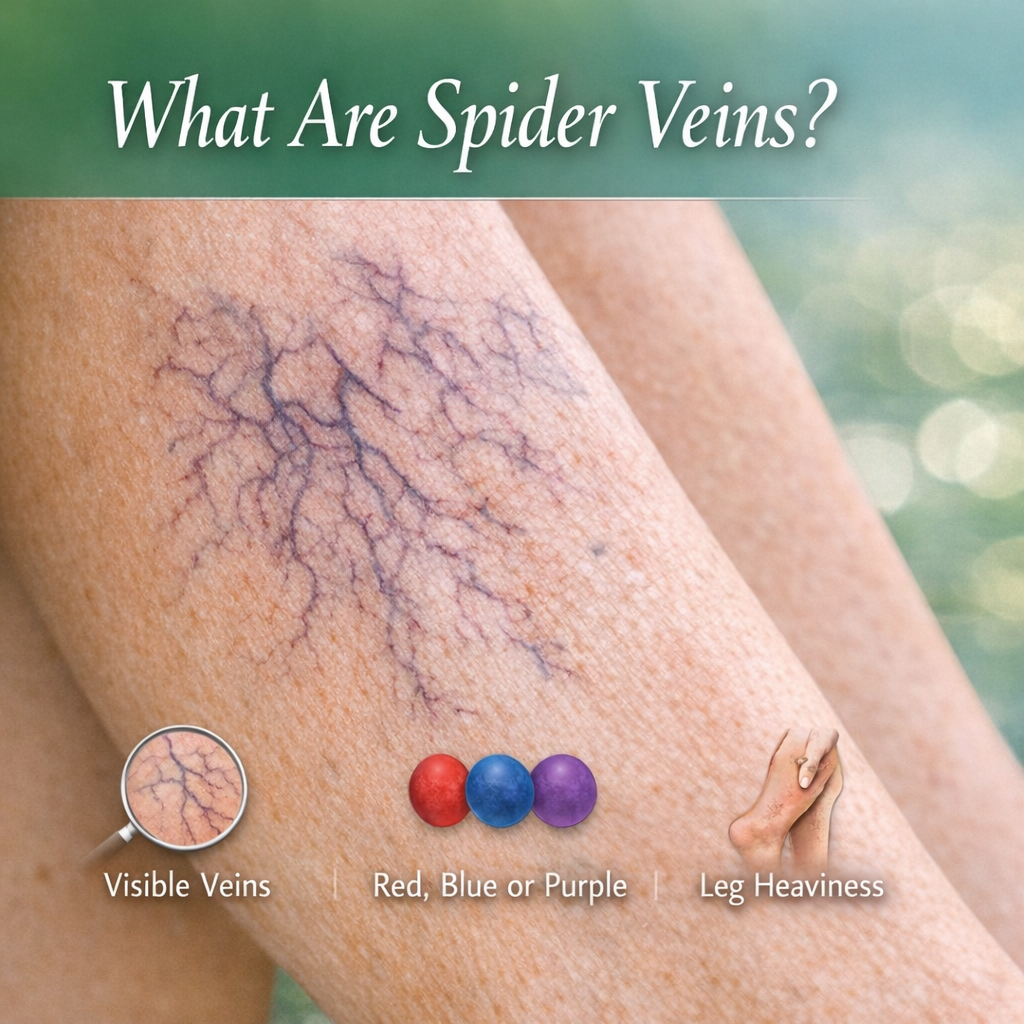
What Are Spider Veins?
Key points
- Commonly found on thighs, calves, ankles, and face
- Related to vein wall eakness and valve dysfunction
- Highly treatable with in-office procedures
Common Causes
Spider veins can develop due to one or more of the following:
- Genetics: family history is a major factor
- Hormonal changes: pregnancy, menopause, or medications
- Standing or sitting for long periods: reduced calf pump activity
- Age: natural changes in veins and connective tissues
- Sun exposure: especially for facial vessels
- Previous injury or inflammation
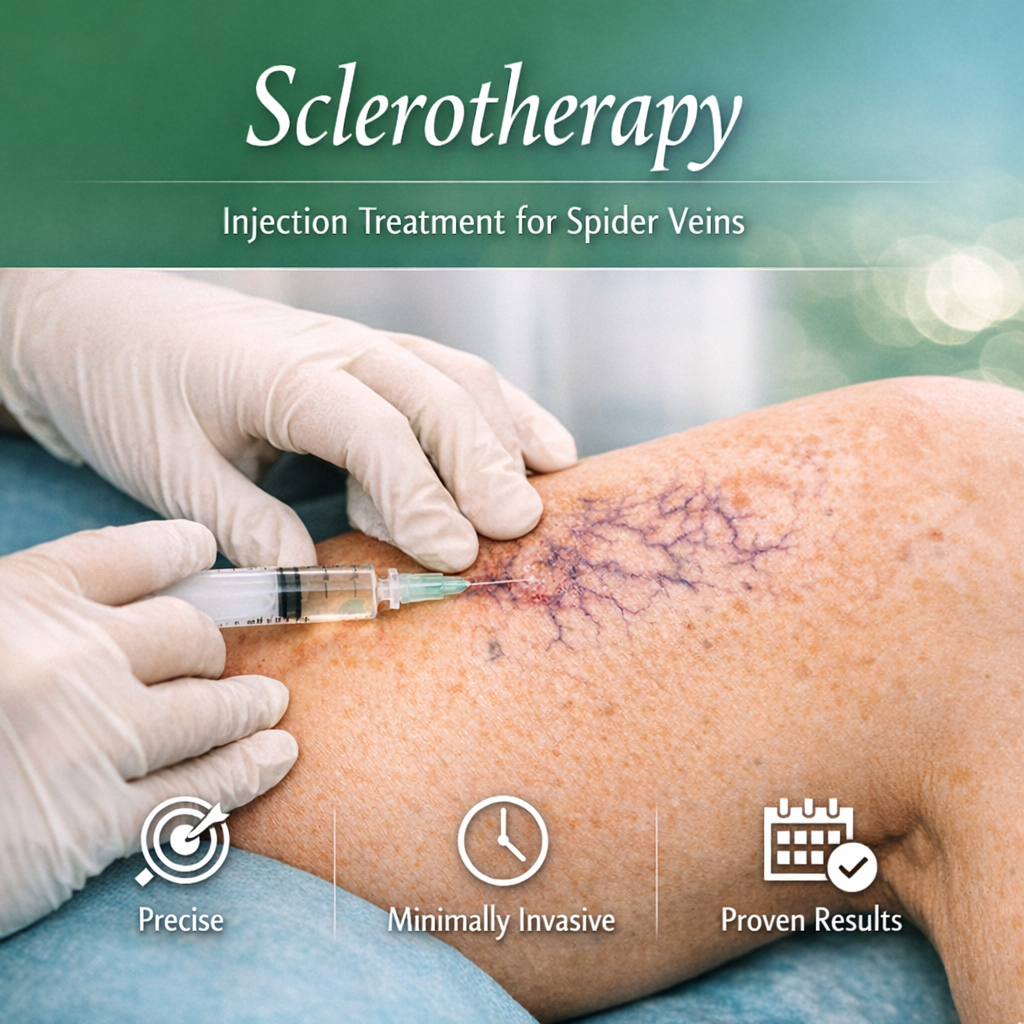
Sclerotherapy
The most widely used technique for spider veins on the legs. A microinjection delivers a sclerosant solution into the vein, causing it to collapse and fade over time.
Benefits: precise targeting, minimal downtime, predictable outcomes.
Vascular Laser
Light energy selectively heats the vessel, sealing it without injections. Ideal for very fine vessels or specific areas.
Benefits: noninvasive, fast sessions, suitable for delicate zones.
Regenerative Aftercare Protocols
Personalized guidance to support microcirculation and skin recovery post-treatment.
Treatment facts (icons or bullets):
- Sessions: typically 15–30 minutes
- Number of sessions: varies by map and density (often 1–3)
- Downtime: resume normal activity immediately; compression may be recommended
- Results: gradual fading over weeks
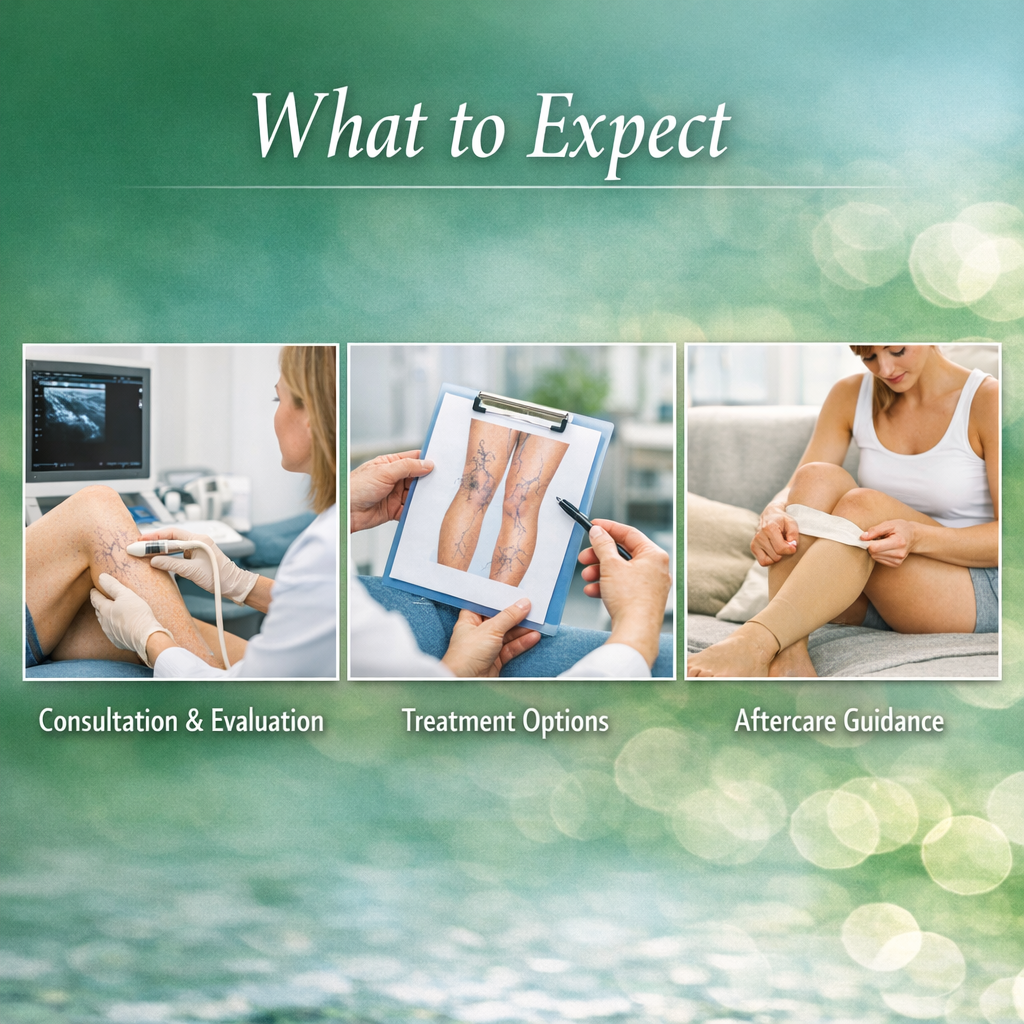
What to Expect
During Your Visit:
- Comprehensive assessment of vein pattern and symptoms
- Discussion of treatment options, timeline, and pricing
- Same-day treatment may be available
Aftercare Highlights:
- Light walking encouraged
- Avoid direct sun/heat on treated areas for 48–72 hours
- Follow compression guidance if recommended
- Expect temporary redness or mild sensitivity
Frequently Asked Questions
Many patients see improvement after the first session. Most plans require 1–3 sessions depending on the number and size of vessels.
ullamcorper mattis, pulvinar dapibus leo.
Treatments are well-tolerated. You may feel brief pinching or warmth. Discomfort is typically minimal and short-lived.
Treated vessels are gone for good; however, new spider veins can form over time. Maintenance sessions can keep results optimal.
You can resume daily activities immediately. High-impact workouts are usually postponed for 24–48 hours as directed.
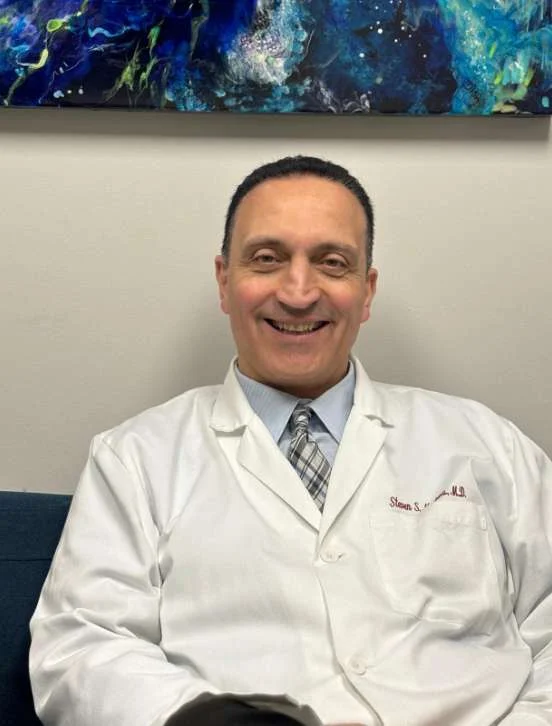
Steven S. Moalemi, MD, FAAPMR Medical Director
Dr. Steven S. Moalemi, MD, FAAPMR, is a leading Physiatrist and Regenerative Medicine Specialist serving New York and New Jersey, with convenient locations in Midtown Manhattan and Paramus, NJ.
Board-certified since 1999 and a fellow of the American Academy of Physical Medicine and Rehabilitation, Dr. Moalemi holds the highest credentials in his field. His ongoing training in the latest treatment protocols and technologies makes him a trusted consultant among peers and a recognized expert in physical medicine and rehabilitation.
At our clinic, Dr. Moalemi and his team are dedicated to relieving pain and restoring function in a supportive and comfortable environment. We prioritize patient care by actively listening, customizing treatments, and focusing on lasting recovery — all with the goal of helping you return to a pain-free and active life.
Get in Touch with Us Today!
Have questions or ready to take the next step? Fill out our contact form, and our team will get back to you as soon as possible. Let’s start your journey to confidence and beauty—schedule your consultation now!